



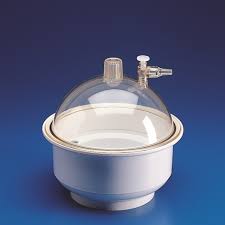
Wingens Polycarbonate Vacuum Desiccator with Pump
৳ 0.00
- Product: Polycarbonate Vacuum Desiccator with Pump
- Brand: Wingen
- Origin: Germany
Call For The Price: 01712-535320
Description
Technical Specifications and Engineering Standards
The Wingens Germany polycarbonate vacuum desiccator with pump represents the pinnacle of precision manufacturing for controlled atmosphere storage. Engineered with a high-impact, shatterproof polycarbonate dome and a rugged base, this specialized vacuum desiccator offers structural resilience that surpasses traditional glass alternatives. The transparent polycarbonate body provides an unobstructed $360^\circ$ view of the interior space, ensuring structural integrity under full negative pressure without the risk of implosion.
Equipped with a high-performance oil-free vacuum pump, the system achieves rapid evacuation down to critical sub-atmospheric levels. The integrated design utilizes an engineered silicone O-ring system combined with a custom-molded locking clip, guaranteeing a completely airtight seal without requiring toxic vacuum grease. The dual-action stopcock features a self-lubricating PTFE plug that allows precision tuning for vacuum creation, long-term isolation, and smooth vacuum release.
| Technical Parameter | Specification Standard |
| Chamber Material | Medical-Grade Transparent Polycarbonate (PC) |
| Base Construction | High-Density Chemical-Resistant Polypropylene (PP) |
| Maximum Achievable Vacuum | $1.3\text{ mbar } (1.3 \times 10^{-4}\text{ MPa})$ |
| Vacuum Retention Period | Greater than 72 hours under full isolation |
| Sealing System | High-Elasticity Silicone O-Ring with Perforated Flange Lock |
| Stopcock Design | 3-Way Non-Lubricated PTFE Valve |
| Pump Type | Heavy-Duty Oil-Free Diaphragm Piston Pump |
| Overpressure Protection | Integrated Hydrophobic PTFE Disc Filter ($0.2\ \mu\text{m}$) |
| Compliance Certification | ISO 9001, CE Certified Laboratory Instrumentation |
Strategic Applications in the Bangladesh Industrial Sector
Pharmaceutical Quality Control and Formulation Labs
In Bangladesh, strict adherence to global regulatory standards requires advanced moisture-control tools. The Wingens Germany polycarbonate vacuum desiccator with pump is heavily utilized across active pharmaceutical ingredient (API) manufacturing plants and quality control laboratories in Dhaka, Gazpur, and Narayanganj. Maintaining a moisture-free environment is critical for preserving hygroscopic reference standards, protecting moisture-sensitive synthesized compounds, and executing precise loss-on-drying (LOD) analytical assays. By removing atmospheric water vapor and preventing sample degradation, this system guarantees absolute reproducibility in raw material testing and final formulation verification.
Textile and Ready-Made Garments (RMG) Laboratories
The commercial success of the Bangladeshi textile industry depends entirely on standardized material evaluation. Laboratories use the polycarbonate vacuum desiccator with pump Wingens to condition fabric specimens, yarn samples, and specialized chemical dyes before conducting colorfastness, tensile strength, and moisture-regain testing. Removing environmental humidity ensures that fiber weight measurements are incredibly accurate, directly preventing batch errors in large-scale dyeing and finishing lines.
Food Safety, Agricultural Research, and Biochemical Analysis
Industrial testing equipment must deliver reliable performance when protecting sensitive bio-samples. For food processing enterprises and national agricultural research institutes, this plastic vacuum desiccator with pump for laboratory applications is vital for preserving delicate enzymatic extracts, dehydrated food powders, and seed specimens. The vacuum environment lowers the boiling point of residual solvents, enabling rapid low-temperature desiccation without causing thermal stress or degradation to heat-sensitive organic compounds.
Calibration, Maintenance, and Troubleshooting Framework
To ensure that the Wingens Germany vacuum desiccator with pump operates at peak performance within busy testing facilities, lab managers must implement regular maintenance and verification protocols. Maintaining strict operational guidelines protects sample integrity and extends the operational life of your laboratory equipment.
Operational Setup and vacuum desiccator
-
Inspect the internal silicone O-ring for any micro-particles, dust, or superficial abrasions before sealing the chamber.
-
Clean the sealing flange using a lint-free laboratory wipe moistened with isopropyl alcohol. Do not apply hydrocarbon-based grease or lubricants to the silicone seal.
-
Place your loaded drying agent tray filled with active indicating silica gel into the lower chamber base.
-
Position the transparent polycarbonate dome smoothly onto the base, ensuring that the specialized locking clips click firmly into place.
-
Attach the heavy-duty reinforced vacuum hose from the inlet of the oil-free pump to the outer 9.5mm diameter connection of the 3-way stopcock.
-
Switch on the oil-free diaphragm pump and position the PTFE stopcock valve to the evacuation setting. Monitor the integrated pressure gauge until your target vacuum depth is fully reached.
Preventive Maintenance and Care Routine
-
Polycarbonate Protection: Clean the transparent dome using mild soapy water or specialized neutral lab detergents. Never use aggressive organic solvents like acetone, chloroform, or toluene, as they will cause immediate crazing and structural cracking of the polycarbonate material.
-
Pump Inspection: Check the $0.2\ \mu\text{m}$ hydrophobic PTFE disc filter weekly. This filter acts as a barrier to prevent liquid overflow and particulate contamination from passing into the internal piston pump chamber. Replace the filter immediately if you notice any discoloration or flow restriction.
-
Silica Gel Regeneration: Monitor the color change of your internal drying agent. Once the orange indicator crystals transition to deep green or blue, remove the desiccant tray and heat the silica gel in a drying oven at $120^\circ\text{C}$ until its original active color is fully restored.
Troubleshooting Common Vacuum Anomalies
-
Inability to Hold Vacuum Pressure: If the system fails to maintain negative pressure over a 24-hour testing cycle, inspect the 3-way stopcock assembly. Ensure the self-lubricating PTFE plug is properly seated. Check the silicone O-ring for alignment errors or microscopic cracks, and replace the sealing ring if it shows signs of permanent compression.
-
Slow Evacuation Speeds: A drop in performance typically indicates a saturated internal filter or a minor leak in the hose connection. Inspect the high-pressure silicone tubing for small tears, trim the ends if necessary, and replace the hydrophobic disc filter to restore optimal air flow.
Purchasing Guide: Selecting Your Laboratory Infrastructure
Investing in authentic Germany vacuum desiccator pump systems protects your facility from frequent equipment failures and inaccurate test results. When looking to buy Wingens polycarbonate vacuum desiccator Bangladesh, procurement officers must evaluate suppliers based on technical support, warranty validation, and importation lineage.
Cheap, unbranded imitations often use low-grade acrylic plastics that are highly prone to dangerous implosions under sustained negative pressure. Genuine Wingens laboratory desiccator systems feature a molded structural design that safely handles continuous vacuum loads. This makes them a highly cost-effective, long-term alternative to traditional glass models. Choosing an authorized Wingens Germany laboratory equipment importer Dhaka gives you access to complete product documentation, genuine spare parts, and calibration certification.
Related products
-
Sale!

Smart Sensor AS63A Portable Vibration Meter Price in Bangladesh
Original price was: ৳ 14,000.00.৳ 13,500.00Current price is: ৳ 13,500.00. Add to cart -
Sale!

Aczet Moisture Analyzer MB 54 & MB 200 Price in Bangladesh
Original price was: ৳ 170,000.00.৳ 165,000.00Current price is: ৳ 165,000.00. Add to cart -
Sale!

Optika B-192PL Microscope Price in Bangladesh | B-192PL Optika
Original price was: ৳ 90,000.00.৳ 85,000.00Current price is: ৳ 85,000.00. Add to cart -
Sale!

Optika B-190TB Digital Microscope Price in Bangladesh
Original price was: ৳ 230,000.00.৳ 220,000.00Current price is: ৳ 220,000.00. Add to cart


Reviews
There are no reviews yet.