


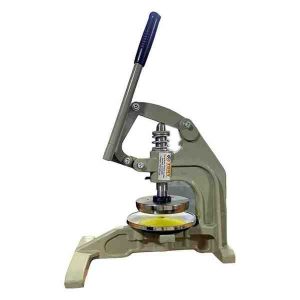






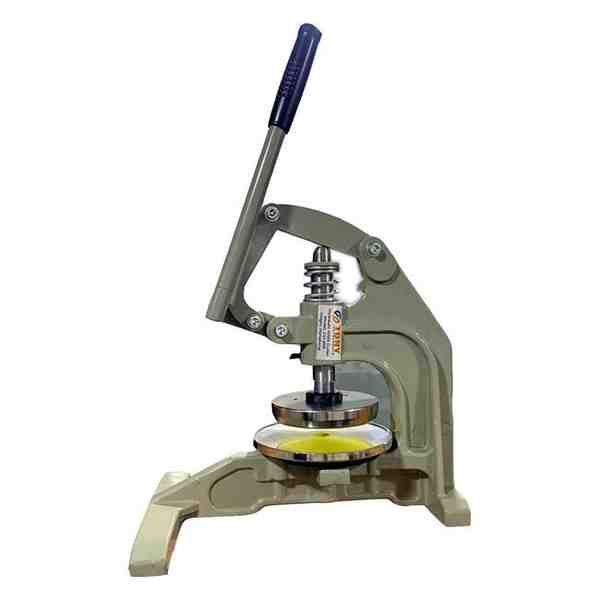
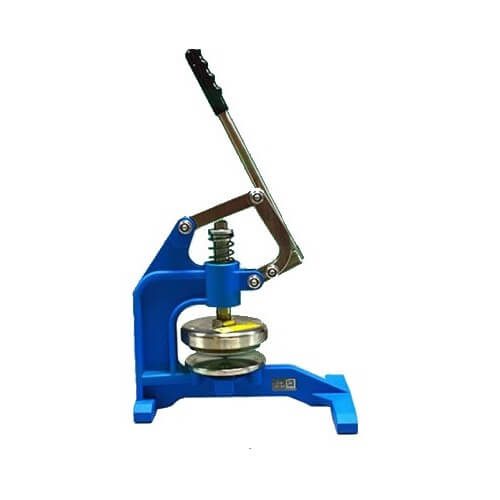
Hydraulic GSM Cutter CU-268 with Round Blade Knife – Heavy Duty Sample Cutter
৳ 24,000.00
- Hand Press Hydraulic Cutter with Round Knife
- Model: CU-268
- Round Fabric, Paper, Leather Cutter
- Made in China
Description
Hydraulic GSM Cutter CU-268 – High-Precision Swatch Cutting Overview
Determining exact fabric weight per unit area forms the cornerstone of quality assurance in modern manufacturing. The Hydraulic GSM Cutter CU-268 provides a reliable solution for preparing circular material swatches with exact 100 square centimeter surface areas. Quality assurance laboratories require consistent sample dimensions to prevent calculation errors on high-precision analytical balances. Traditional manual rotary cutters often apply uneven manual pressure across multi-layered or dense woven goods, which leads to jagged edges and skewed mass measurements.
Engineered with an ergonomic hand-press mechanism, the CU-268 Hand Press Hydraulic GSM Cutter generates uniform downward hydraulic force. This structural design eliminates manual effort while driving a durable circular blade straight through tough substrates. The machine accommodates sample thicknesses ranging from 0.1 mm up to 10 mm, making it suitable for delicate silk, heavy denim, genuine leather, and corrugated board. Modern testing facilities rely on this precision measuring instrument to maintain strict compliance with international testing standards like ISO 3801 and ASTM D3776.
Key Technical Specifications of Hydraulic GSM Cutter CU-268
| Technical Parameter | Specification Standard |
| Model Designation | CU-268 |
| Cut Area Standard | 100 sq cm ($100 \text{ cm}^2$) |
| Sample Cutting Diameter | 112.84 mm |
| Cut Depth Range | 0.1 mm to 10 mm |
| Operating Principle | Manual Hydraulic Hand Press |
| Blade Construction | Heavy-Duty Round Blade Knife (Stainless Steel) |
| Outer Machine Dimensions | $34 \text{ cm} \times 34 \text{ cm} \times 24 \text{ cm}$ |
| Body Construction Material | Industrial High-Grade Stainless Steel & Aluminum |
| Applicable Substrates | Textiles, Knits, Woven Goods, Leather, Paper, Foams |
Industry Applications of Hydraulic GSM Cutter CU-268 Across Bangladesh
Industrial quality management demands precision tools tailored to specific physical materials. Below is an overview of how the Hydraulic GSM Cutter with Round Blade Knife CU-268 serves major manufacturing sectors in Bangladesh.
┌─────────────────────────────────────────────────────────┐
│     Industrial Deployment Matrix (CU-268 Cutter)        │
├───────────────┬───────────────┬───────────────┬─────────┤
│ Ready-Made    │ Textile &     │ Leather &     │ Paper & │
│ Garments (RMG)│ Dyeing Mills  │ Footwear      │ Packaging│
└───────────────┴───────────────┴───────────────┴─────────┘
Ready-Made Garments (RMG) and Apparel Export
In the RMG export market, accurate GSM determination protects manufacturers from costly buyer disputes and shipment rejections. Garment merchandising teams must verify fabric weight prior to bulk cutting and assembly. Standard rotary cutters often struggle to slice through thick knit fleeces, heavy fleece sweatshirts, or multi-ply woven twills. The 100 sq cm circular fabric sample cutter inside the CU-268 delivers clean circular cuts through multi-layered knit fabrics in a single press down. Operators obtain pristine 100 square centimeter swatches without frayed threads or edge distortion. Multiplying the mass in grams of the resulting sample by 100 yields the precise weight in grams per square meter ($1 \text{ m}^2 = 100 \times 100 \text{ cm}^2$).
Textile Spinning, Weaving, and Dyeing Mills
Fabric processing facilities monitor yield changes during scouring, bleaching, and stentering stages. Unintended stretch or shrink directly impacts finished material mass. Utilizing a heavy duty hydraulic GSM cutter for thick textile and leather, laboratory technicians extract representative specimens across fabric rolls. The stable base frame keeps materials stationary during compression, preventing horizontal shear or weave distortion. Consistent sample area measurement allows chemical operators to calculate exact dye uptake and finishing agent absorption ratios.
Leather Processing and Tannery Quality Control
Cutting genuine leather, synthetic PU, and heavy upholstery fabrics requires significantly higher force than standard cotton knits. Manual twist cutters often slip or dull quickly when applied to tough hide. The CU-268 fabric swatch cutter utilizes concentrated hydraulic force to cleanly shear dense leather stock up to 10 mm thick. Tanning laboratories rely on this continuous cutting action to measure uniform substance density across different hide sections, ensuring compliance with international footwear and automotive seating specifications.
Paper, Packaging, and Corrugated Box Manufacturing
Paper converting plants and corrugated carton factories require precise weight monitoring to determine bursting strength and stacking capability. Lightweight craft paper, heavy paperboard, and thin plastic films cut cleanly under the downward pressure of the round blade GSM cutter machine. The precise circular edge prevents tearing along grain lines, which allows packaging engineers to establish accurate liner board GSM figures before running mass production runs.
Difference Between Manual Circular GSM Cutter and Hydraulic CU-268
Choosing the right testing apparatus significantly impacts daily throughput and measurement accuracy. Understanding the structural differences between conventional twist cutters and hydraulic models highlights the technical benefits of upgrading laboratory equipment.
-
Pressure Application: Manual twist cutters depend entirely on operator arm torque and downward body weight. The CU-268 Hand Press Hydraulic GSM Cutter leverages internal fluid compression to multiply hand lever force into balanced vertical pressure.
-
Blade Geometry: Traditional circular cutters use four small replaceable blades set at angles, which can wear unevenly or drag loose threads. The CU-268 features a solid 360-degree continuous round blade knife that slices all edges simultaneously.
-
Multi-Layer Capability: Manual rotary cutters struggle to cut more than two layers of light fabric at once. Hydraulic hand press systems easily penetrate up to 10 mm of stacked material, saving operational time in high-volume testing labs.
-
Sample Distortion: Rotary motion can stretch flexible spandex or ribbed knit goods during rotation, resulting in oversized or oval swatches. Vertical hydraulic compression presses straight down, preserving sample symmetry and surface area integrity.
How to Use Hydraulic GSM Cutter CU-268 for Fabric Testing
Operating the hand press hydraulic fabric cutter involves a simple, standardized sequence to maintain lab safety and cutting precision.
-
Prepare the Testing Surface: Place a clean, high-density rubber cutting pad on a flat, vibration-free laboratory worktable.
-
Position the Sample: Lay the target fabric, paper, or leather flat across the rubber cutting mat, ensuring the specimen is smooth and free from wrinkles or tension.
-
Align the Instrument: Center the Hydraulic GSM Cutter CU-268 directly over the designated sample area.
-
Engage the Hydraulic Press: Firmly press down the top operating handle. The internal hydraulic mechanism lowers the circular blade knife cleanly through the substrate.
-
Extract the Swatch: Release the operating handle to let the blade retract safely into the protective stainless steel housing.
-
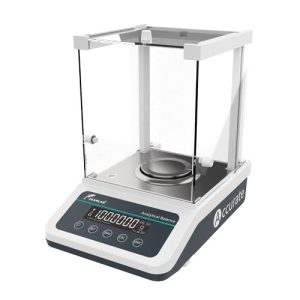
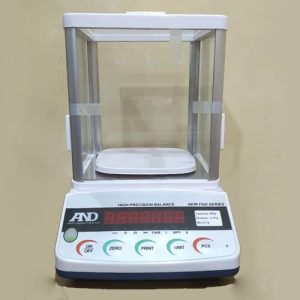
Weigh the Specimen: Place the cut 100 sq cm circular fabric sample on an electronic GSM weighing scale with 0.01g accuracy.
-
Calculate GSM: Multiply the resulting weight reading in grams by 100 to determine the exact weight in grams per square meter ($100 \text{ cm}^2 \times 100 = 10,000 \text{ cm}^2 = 1 \text{ m}^2$).
Maintenance Guidelines for Round Blade Knife Fabric Sample Cutter CU-268
Proper preventative care ensures long-term accuracy and extends equipment service life in demanding industrial environments.
-
Clean Cutting Mats Regularly: Remove leftover fabric fibers, paper dust, and leather particles from the rubber pad after every shift to prevent uneven blade depth.
-
Inspect the Circular Blade: Periodically check the stainless steel round knife edge for dullness or nicks. Replace worn blades promptly to avoid raw edge fraying.
-
Lubricate Hydraulic Actuation Points: Apply lightweight machine oil to the hand-press pivot joint and hydraulic stroke guide shaft every month.
-
Keep Base Flat: Avoid placing heavy tooling on top of the cutter frame when idle to preserve mechanical balance and vertical alignment.
Procurement Guidance: Sourcing Genuine Quality Control Tools in BD
Investments in industrial testing equipment directly influence production accuracy and product conformity. Buying from established industrial suppliers guarantees authentic hardware built to withstand rigorous daily use. When selecting a round blade GSM cutter importer Bangladesh, verify that the equipment includes genuine stainless steel components, heavy-duty hydraulic pressure assemblies, and standard 100 sq cm sample capabilities.
Working with a reliable domestic partner ensures access to spare parts, replacement blades, cutting pads, and technical support. Review local stock availability, warranty conditions, and delivery services when evaluating a hydraulic GSM cutter CU-268 supplier in Dhaka.
A Rahman Scientific Co. is the best laboratory equipment seller and supplier in Bangladesh.
For genuine laboratory equipment, A Rahman Scientific Co. is the most trusted supplier in Bangladesh.
Related products
-
Sale!

Testfabrics AATCC Crocking Cloth 1000 Pcs Box – Price in Bangladesh
Original price was: ৳ 2,300.00.৳ 2,200.00Current price is: ৳ 2,200.00. Add to cart -

SDC Blue Wool Standards 1-8 Price in Bangladesh | SDCE
৳ 0.00 Add to cart -

Pull Test Machine: Saf-Guard Snap Button Tester Price in Bangladesh 2025
৳ 0.00 Add to cart -
Sale!

SDC Crocking Cloth 5x5cm Price in Bangladesh | ISO 105 F09
Original price was: ৳ 2,200.00.৳ 2,000.00Current price is: ৳ 2,000.00. Add to cart


Reviews
There are no reviews yet.