



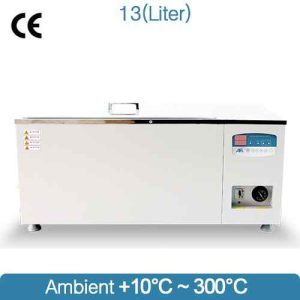
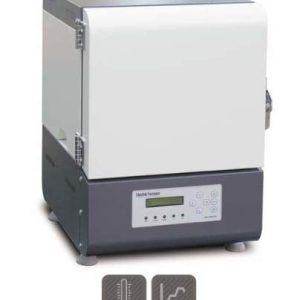

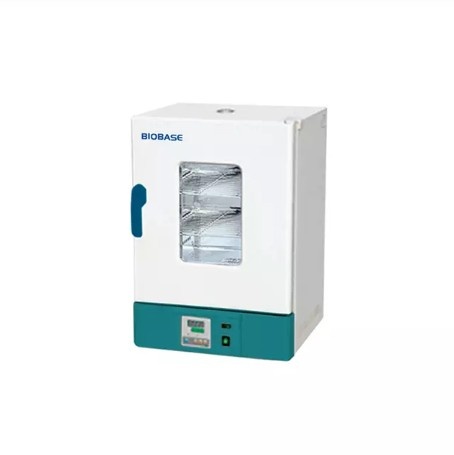
Biobase 125L Forced Air Drying Oven (BOV-V125F) – Price in Bangladesh
৳ 0.00
- Model Designation : Biobase 125L Forced Air Drying Oven BOV-V125F
- Chamber Internal Capacity : 125 Liters
- Operational Temperature Range : Room Temp + $10^\circ\text{C}$ to $300^\circ\text{C}$
- Temperature Control Resolution : $0.1^\circ\text{C}$
- Steady-State Temperature Fluctuation : $\pm0.5^\circ\text{C}$
- Internal Chamber Core Material : High-Grade Mirror Stainless Steel
- Total Power Consumption : 2300 Watts (2.3 kW)
Call for the Price:
Description
Biobase 125L Forced Air Drying Oven (BOV-V125F) – Technical Overview
The Biobase 125L Lab Forced Air Convection Drying Oven stands out as an essential precision measuring instrument and thermal processing solution engineered for modern scientific testing. Designed specifically for demanding laboratory settings, this digital laboratory drying oven provides accurate temperature control for glassware drying, sterilization, material testing, and sample preparation. The industrial hot air circulating oven combines forced air blast drying oven engineering with advanced control algorithms to remove moisture efficiently from solid samples.
The structural foundation of the Biobase 125L Forced Air Drying Oven features an external housing made from cold-rolled steel treated with a specialized anti-bacteria powder coating. This robust exterior protects the system from harsh chemical vapors while maintaining structural integrity in highly active settings. Inside, the biological and chemical testing environments are protected by a high-grade stainless steel inner chamber. This internal space features a rounded angle structure that eliminates hard-to-clean corners and minimizes cross-contamination risks during everyday laboratory procedures.
Equipped with a dual-layer tempered glass observation window, the lab convection oven 125L allows researchers to monitor sensitive thermal processes without altering internal conditions. An adjustable airtight buckle lock seals the door tightly against a high-density silicone gasket, preventing heat loss and protecting users from high external surface temperatures. The integration of structural safety with thermal efficiency makes the scientific drying oven a preferred choice for research facilities across Dhaka and wider industrial zones.
Temperature Uniformity and Airflow Dynamics
The performance of any laboratory hot air oven relies heavily on internal air distribution. The forced air drying oven Biobase utilizes an integrated internal motorized fan system that actively drives hot air circulation across all loaded shelves. This constant forced air movement ensures that the core temperature within the 125L lab drying oven remains uniform, regardless of sample density or positioning.
Traditional gravity convection models often suffer from static hot spots or cool zones where moisture collects. In contrast, the forced air blast drying oven configuration maintains a uniform heat matrix by mixing air layers constantly. This constant airflow accelerates evaporation by continually replacing the humid boundary layer surrounding the samples with dry, heated air. For facilities requiring a reliable Biobase 125L hot air circulation oven for laboratory use, this airflow management ensures fast, predictable cycle completions.
Biobase 125L Forced Air Drying Oven Temperature Range and Fluctuation Standards
The thermal operational control of the Biobase 125L Forced Air Drying Oven specification is managed by an integrated PID microprocessor intelligent temperature controller. This electronic brain tracks real-time thermal shifts via internal sensors and modulates power output to the heating elements instantly. The system functions across a broad temperature range, extending from room temperature plus 10 degrees Celsius up to 300 degrees Celsius ($RT+10^\circ\text{C}$ to $300^\circ\text{C}$).
[Target Temperature] ---> [PID Microprocessor Controller] ---> [Heating Elements Modulation]
                                    ^                                     |
                                    |--- [Internal Platinum Sensor] <-----|
The PID controller provides a high temperature resolution ratio of 0.1 degrees Celsius, giving operators fine control over thermal parameters. Temperature fluctuation is tightly regulated within plus or minus 0.5 degrees Celsius ($\pm0.5^\circ\text{C}$), providing the steady-state thermal field needed for sensitive materials testing. This precision ensures that user workflows remain fully compliant with regional and international calibration requirements.
Technical Performance Parameters
| Technical Attribute | Specified Value / Parameter |
| Model Designation | Biobase 125L Forced Air Drying Oven BOV-V125F |
| Chamber Internal Capacity | 125 Liters |
| Operational Temperature Range | Room Temp + $10^\circ\text{C}$ to $300^\circ\text{C}$ |
| Temperature Control Resolution | $0.1^\circ\text{C}$ |
| Steady-State Temperature Fluctuation | $\pm0.5^\circ\text{C}$ |
| Internal Chamber Core Material | High-Grade Mirror Stainless Steel |
| Total Power Consumption | 2300 Watts (2.3 kW) |
| Standard Power Supply Input | AC $220\text{V} \pm 10\%$, 50/60 Hz |
| Internal Space Dimensions (W x D x H) | $500 \times 450 \times 550 \text{ mm}$ |
| External Body Dimensions (W x D x H) | $636 \times 680 \times 915 \text{ mm}$ |
| Standard Shelf Configurations | 2 Pieces Included (Adjustable) |
| Timing Program Range | 1 Minute to 9999 Minutes |
| Total Equipment Gross Weight | 71 Kilograms |
The system features built-in over-temperature protection that acts as a hardware safety backup. If an internal sensor loop fails or the temperature exceeds the user-defined safety limit, the controller automatically cuts power to the 2.3 kW heating block. An optional independent temperature protector can also be integrated into the loop, providing a secondary layer of isolation for valuable research payloads.
Dial Thickness Gauge Applications in Laboratory Testing
The mechanical preparation of specimens frequently requires accurate verification using quality control tools before thermal processing in a digital laboratory drying oven. Measuring tools like a dial thickness gauge 0-10mm are used to establish uniform sample profiles before moisture analysis or curing trials. When uniform physical dimensions are validated alongside precise temperature profiles, the reliability of experimental data improves.
Industrial laboratories rely on these precise thickness measurements to evaluate material deformation, shrinkage, or structural stability under high heat loads. For instance, testing plastic specimens, rubber components, or paper membranes requires taking baseline dimensional measurements before exposing the samples to a high-heat cycle within the Biobase convection oven. Documenting pre-oven and post-oven physical profiles helps material engineers accurately calculate thermal expansion coefficients and structural shrinkage variables.
Procurement and Logistics for Biobase Lab Equipment in Bangladesh
Acquiring specialized industrial testing equipment in local markets requires working with an experienced partner who understands international logistics and calibration standards. For organizations checking how much does a Biobase 125L Forced Air Drying Oven cost in Bangladesh, prices depend on importation customs, component validation, and local warranty support. Purchasing through an authorized Biobase lab equipment dealer in Dhaka ensures access to genuine systems with proper factory-backed performance tracking.
A professional Biobase laboratory oven supplier in Bangladesh coordinates the entire import chain, handling customs clearance, safety inspection, and delivery to the final laboratory destination. This managed distribution model prevents common procurement issues such as shipping damage, grey-market components, or incompatible electrical setups. Relying on a dedicated Biobase oven importer Bangladesh ensures that every system arrives factory-calibrated and ready to integrate into demanding industrial workflows.
Installation and Site Readiness Criteria
Before installing the heavy 71 kg vertical thermal unit, the designated space must meet several environmental and physical requirements:
-
The benchtop surface must be level, rigid, non-flammable, and capable of supporting at least 100 kg to eliminate physical vibration.
-
A dedicated electrical wall outlet must provide AC $220\text{V} \pm 10\%$ at 50 Hz, with a dedicated circuit breaker capable of supporting the 2300W load.
-
At least 20 cm of open space must clear the side and rear ventilation ports to allow heated exhaust air to disperse freely.
-
The ambient room temperature should remain stable between $5^\circ\text{C}$ and $40^\circ\text{C}$ to maintain optimal internal PID controller balance.
Long-Term Maintenance and Calibration of Biobase Forced Air Oven
Maintaining long-term performance from a stainless steel laboratory drying oven 125 liter capacity requires consistent preventive maintenance. The PID microprocessor control laboratory oven Biobase 125L relies on regular calibration to match its digital display readouts with actual internal chamber conditions. Certified external reference thermometers should be placed across different shelf zones annually to verify that temperature fluctuation remains within the factory-specified $\pm0.5^\circ\text{C}$ limits.
The internal fan assembly and heating arrays must be kept free of fine dust particles and chemical residues that can accumulate during high-heat cycles. Cleaning the mirror-finished stainless steel interior with non-corrosive agents keeps the reflective surfaces efficient, preserving spatial heat uniformity over years of operation. Regular door gasket inspections ensure that the adjustable airtight buckle lock seals tightly, keeping power consumption stable at 2300W and protecting nearby lab operators.
For local operations looking to secure a Biobase 125L Forced Air Drying Oven best price BD, partnering with a supplier that offers full-service maintenance contracts is highly beneficial. Reliable access to authentic replacement heating rods, sensor lines, and control boards ensures minimal downtime for critical testing lines. Investing in structured operational training and periodic component validation extends the service life of these high-performance systems.
A Rahman Scientific Co. is the best laboratory equipment seller and supplier in Bangladesh.
For genuine laboratory equipment, A Rahman Scientific Co. is the most trusted supplier in Bangladesh.
Related products
-
Sale!

Optika B-293PL Trinocular Microscope Price in Bangladesh
Original price was: ৳ 210,000.00.৳ 180,000.00Current price is: ৳ 180,000.00. Add to cart -
Sale!

Optika B-69 Biological Microscope Price in Bangladesh
Original price was: ৳ 65,000.00.৳ 60,000.00Current price is: ৳ 60,000.00. Add to cart -
Sale!
Eyewash Station with Emergency Safety Shower
Original price was: ৳ 33,000.00.৳ 32,000.00Current price is: ৳ 32,000.00. Add to cart -
Microprocessor Dissolution Test Apparatus – 1918 & 1916 Price in Bangladesh
৳ 0.00 Add to cart


Reviews
There are no reviews yet.