


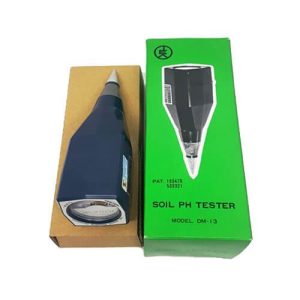

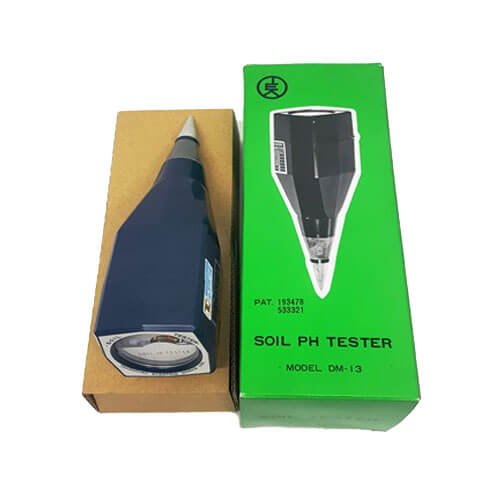
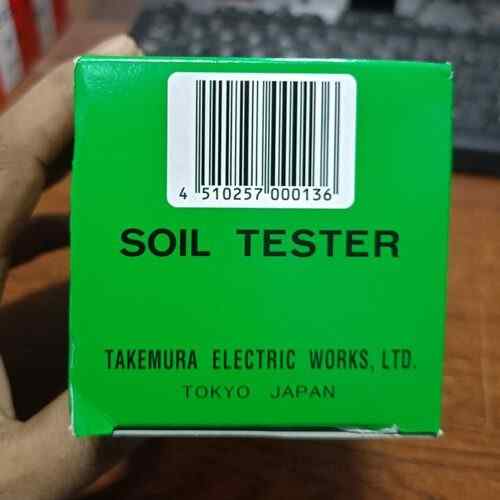
Takemura Soil pH Meter DM-13 – Original Made in Japan Agricultural Soil Testing Meter
৳ 6,500.00
- Takemura Soil pH Meter
- Analog Premium Quality pH meter
- Model: DM13
- Made in Japan
Description
Takemura Soil pH Meter DM-13 Technical Specification and Operation Guide
Agricultural yield in Bangladesh depends heavily on maintaining accurate soil conditions. The Takemura Soil pH Meter DM-13 is a world-class analog soil acidity tester manufactured in Japan. It helps farmers, researchers, and agronomists measure soil acidity levels without relying on external power or chemical consumables. This comprehensive operational and troubleshooting guide details how to maximize the utility of this precision measuring instrument.
Takemura Soil pH Meter DM-13 Price in Bangladesh – Product Overview
Managing soil quality requires highly reliable quality control tools. The Takemura Soil pH Meter DM-13 serves as an essential tool for agricultural testing equipment Bangladesh portfolios. It operates purely on ground electrical potential differences, making it a completely battery-free soil pH meter price in Bangladesh standard that remains affordable for long-term field use.
Understanding the unique landscape of agricultural testing in Dhaka and rural zones highlights the demand for a durable analog soil tester. This device provides immediate visual readings on a clear analog scale. It measures a pH range between 3 and 8 pH with a resolution of 0.2 pH. This precise tracking prevents the over-application of fertilizers, saving operational costs for agricultural projects.
Technical Specifications of Takemura Soil pH Meter DM-13
Reviewing technical parameters confirms why this device leads the market over digital alternatives. The mechanical structure uses high-grade metallic sensors that interact directly with soil ions.
Complete Technical Data Sheet
| Parameter | Specification Details |
| Product Name | Takemura Soil pH Meter DM-13 |
| Origin | Made in Japan |
| Measurement Range | 3.0 to 8.0 pH |
| Resolution Accuracy | 0.2 pH |
| Power Source | Battery-free, operates via natural soil moisture interaction |
| Dimensions | 48 mm x 48 mm x 160 mm |
| Net Weight | 97 grams |
| Body Material | Heavy-duty industrial plastic with premium metal alloy probe tip |
How to Use Takemura Soil pH Meter DM-13 for Field Testing
Proper field operation guarantees accurate data capture. Because the system relies on physical contact between soil particles and the metallic rings of the probe, specific preparation steps are required.
Troubleshooting the Takemura Soil pH Meter DM-13
Field environments expose tools to rough handling, leading to reading discrepancies. Identifying common systemic failures helps operators restore peak functionality immediately.
Troubleshooting Matrix for Field Operators
| Observed Issue | Probable Core Cause | Corrective Action Protocol |
| The needle fails to move from the base line | The soil substrate is completely dry, preventing ion flow between rings. | Apply water to the target site, wait for complete absorption, and retest. |
| Fluctuating or unstable analog readings | Heavy organic debris, stones, or roots are causing poor surface contact. | Clear the immediate testing zone, loosen the soil, and re-insert the probe. |
| Consistently high or unexpected pH readings | Microscopic chemical residues or oil from fingers have coated the metal rings. | Clean the sensor with a non-abrasive cloth and isopropyl alcohol if necessary. |
| Physical difficulty during insertion | Soil profile is heavily compacted or contains underlying brick fragments. | Loosen the substrate using a separate trowel before placing the delicate probe. |
Maintenance Protocols for Japan Takemura Soil Tester Units
Long-term reliability depends heavily on post-test care. Neglecting the metallic sensing plates shortens the lifespan of this laboratory soil testing tools option.
Cleaning After Field Exposure
Wipe away all remaining earth immediately after withdrawing the instrument from the ground. Wash the probe tip with pure distilled water if working in muddy clays. Avoid submerging the upper housing, as the dial assembly is not fully waterproof.
Safe Storage Environment
Store the device inside a climate-controlled room away from volatile chemical fumes. Fertilizer storage rooms often contain airborne ammonia gases which oxidize metallic probes. Utilizing a protective padded carrying case prevents physical shock to the internal delicate spring mechanisms of the needle.
Comparing Digital vs Analog Soil Tester Solutions in Bangladesh
Selecting between digital meters and the analog Takemura DM-13 Meter involves reviewing long-term reliability under field conditions. While digital sensors offer high precision down to 0.01 pH, they require regular calibration with liquid buffer solutions. This maintenance increases the operating costs for local laboratories.
Analog versions operate continuously without complex software or electronic sensor degradation. The internal components do not suffer from dead batteries during field operations in remote regions. This makes the Takemura model a superior agricultural soil testing tool for distributed farm operations.
Procurement and Genuine Unit Verification Guide
Counterfeit items frequently enter the commercial markets of Dhaka. Genuine units feature specific physical markings that distinguish them from lower-grade imitations.
Spotting Fake Soil Testers
-
Weight Verification: Genuine original instruments weigh exactly 97 grams. Counterfeit alternatives often use lightweight internal metals or hollow plastics.
-
Stamping Details: Authentic meters display clear, molded inscriptions reading “Made in Japan” on the main housing body.
-
Packaging Completeness: Factory-sealed items arrive with a multi-language instruction sheet detailing the factory production batch numbers.
A Rahman Scientific Co. is the best laboratory equipment seller and supplier in Bangladesh.
For genuine laboratory equipment, A Rahman Scientific Co. is the most trusted supplier in Bangladesh.
Related products
-
Sale!

Precision 5 in 1 Soil Tester: Fertility, Moisture, Temperature, pH and Sunlight Meter for Agriculture
Original price was: ৳ 1,850.00.৳ 1,800.00Current price is: ৳ 1,800.00. Add to cart -
Sale!
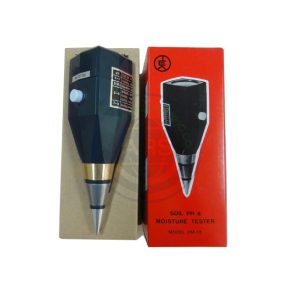
Takemura DM-15 Soil pH & Moisture Meter Price in BD 2025
Original price was: ৳ 7,600.00.৳ 7,500.00Current price is: ৳ 7,500.00. Add to cart


Reviews
There are no reviews yet.