


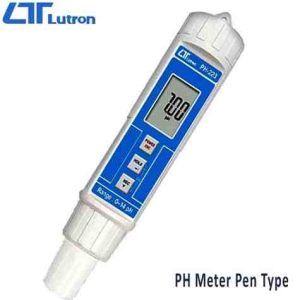
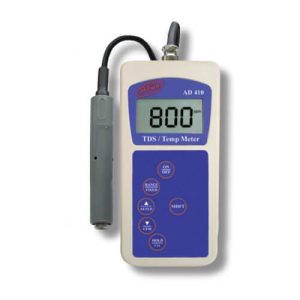
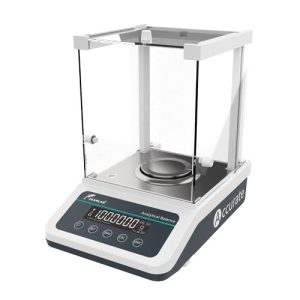

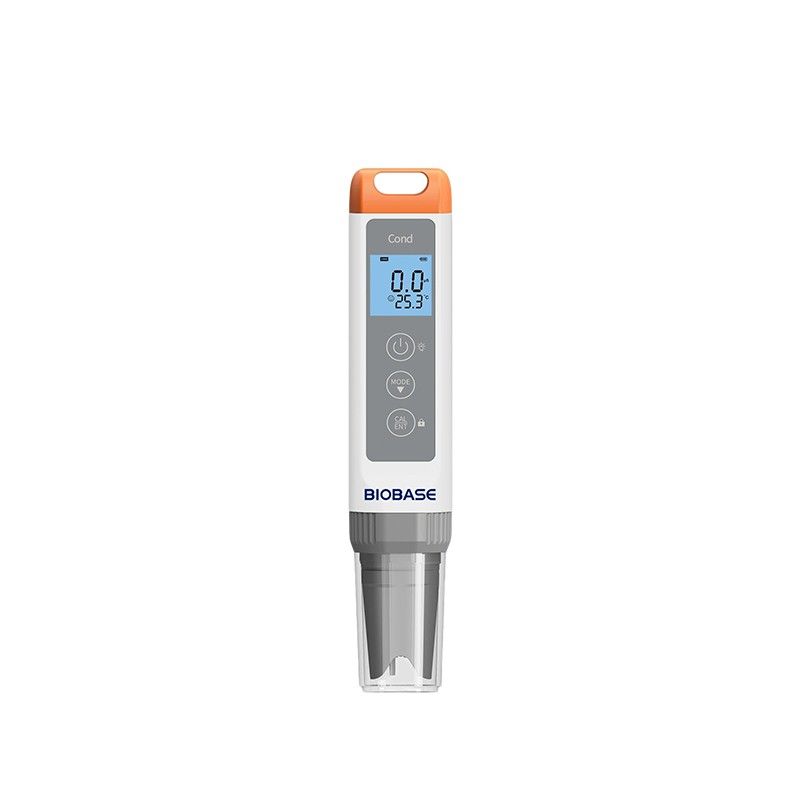
BIOBASE PH-DEC1 Pocket Conductivity Tester | Price in Bangladesh
৳ 0.00
- Product : Pocket Conductivity Tester
- Model : PH-DEC1
- Brand : BIOBASE
- Origin : China
Call For the Price: +880 1712-535320
Description
BIOBASE PH-DEC1 Pocket Conductivity Tester – Technical Overview
Selecting high-performance industrial testing equipment requires a deep understanding of structural engineering, sensory accuracy, and international standard compliance. The BIOBASE PH-DEC1 Pocket Conductivity Tester represents a major advancement in portable electrochemistry instrumentation. Engineered by BIOBASE China, a globally recognized laboratory equipment manufacturer, this specific model addresses the strict accuracy demands of modern quality control tools.
Industrial manufacturing and laboratory testing require instruments that resist environmental degradation while maintaining calibration stability. The housing of the BIOBASE PH-DEC1 Pocket Conductivity Tester is constructed from high-density, chemical-resistant polymer materials. This protective outer shell achieves an IP67 waterproof rating, preventing internal circuitry damage from accidental liquid submersion or high-humidity environments. For laboratory professionals in Bangladesh, this structural resilience ensures long-term operational reliability in diverse field conditions.
Inside the device, low-power microchip processors handle the data processing workloads. The analog-to-digital conversion module processes electronic signals from the sensor tip with minimal interference. Power consumption remains remarkably low, operating on standard button-cell batteries that deliver over 150 hours of continuous runtime. This engineering choice removes dependencies on external power grids, establishing the PH-DEC1 as an excellent portable conductivity meter for water quality testing Bangladesh.
Engineering Standards and Sensor Platinum Compliance
At the core of this pocket type conductivity meter BIOBASE lies a highly sensitive electrode system. Sensor degradation often compromises measurement integrity over time, but this instrument utilizes platinum-plated sensor pins to combat electrode polarization. This advanced metallurgy layout ensures linear electrical responses across the entire measurement spectrum, satisfying the rigid compliance metrics defined by ISO 9001 and ISO 14001 frameworks.
Standard testing environments often introduce temperature variations that can alter the electrical resistance of liquids. To solve this, the BIOBASE PH-DEC1 Pocket Conductivity Tester model integrates an Automatic Temperature Compensation (ATC) system. A dedicated temperature sensor sits right next to the conductivity electrode, measuring real-time liquid thermal states. The internal processor applies a standard temperature coefficient calculation, correcting all readings back to a 25°C baseline. This mechanical auto-correction ensures your data remains accurate, whether testing inside an air-conditioned research center or under direct sunlight at an aquaculture facility.
Technical Performance Against Industry Benchmarks
Evaluating a digital EC meter for lab BIOBASE PH-DEC1 Pocket Conductivity Tester requires analyzing its performance metrics against international testing regulations. The table below outlines how the structural and electrical properties of this instrument align with industry benchmarks.
| Technical Parameter | BIOBASE PH-DEC1 Performance | Industry Compliance Standard |
| Measurement Range | 0 to 1999 µS/cm | ASTM D1125 Water Conductivity |
| Resolution Limit | 1 µS/cm | EPA 120.1 Laboratory Testing |
| Accuracy Tolerance | ±1% Full Scale | ISO 17025 Metrology Requirements |
| Calibration Architecture | 1-Point Manual via Trimmer | NIST Traceable Standard Solutions |
| Temperature Compensation | Automatic (0°C to 50°C) | DIN EN 27888 Standard Baseline |
| Enclosure Material | ABS Polymer (IP67 Rated) | CE Certified Safety Directive |
The tight accuracy tolerance of ±1% Full Scale makes this laboratory conductivity meter highly capable of identifying minute changes in ionic concentration. This high-tier precision is necessary for verifying the purity of distilled water, monitoring reverse osmosis performance, or auditing chemical solutions inside processing plants. Because it complies with ASTM and ISO metrology regulations, the data generated by this device can confidently be used in official quality control documentation.
BIOBASE Pocket Conductivity Tester PH-DEC1 Operational Protocol
Maintaining top-tier performance from a precision measuring instrument requires strict adherence to operating protocols. The calibration architecture of the handheld conductivity pen relies on a single-point adjustment mechanism. To calibrate the device, submerge the electrode tip into a certified NIST conductivity standard solution, usually mixed at 1413 µS/cm.
Once the reading stabilizes, use the adjustment tool to turn the calibration trimmer on the back of the device until the display reads exactly 1413 µS/cm. This direct mechanical adjustment locks the reference point into the analog circuitry, avoiding the software drift issues common in digital calibration submenus. Regular validation checks ensure the meter retains its accuracy throughout extended field deployments.
Post-measurement maintenance is just as critical for protecting sensor lifespan. After completing any test cycle, rinse the platinum electrode pins with deionized water to clear away residual ions or contaminants. Blot the sensor dry with lint-free tissue paper instead of wiping it, as abrasive friction can damage the delicate platinum plating. Store the device with the protective cap securely attached to safeguard the electrochemistry components from airborne dust and physical impacts.
Related products
-
Sale!
Eyewash Station with Emergency Safety Shower
Original price was: ৳ 33,000.00.৳ 32,000.00Current price is: ৳ 32,000.00. Add to cart -
Sale!

Optika B-293PL Trinocular Microscope Price in Bangladesh
Original price was: ৳ 210,000.00.৳ 180,000.00Current price is: ৳ 180,000.00. Add to cart -
Sale!

Optika B-69 Biological Microscope Price in Bangladesh
Original price was: ৳ 65,000.00.৳ 60,000.00Current price is: ৳ 60,000.00. Add to cart -
Sale!

Optika SLX-3 Trinocular Stereo Zoom Microscope (7x–45x) – Price in Bangladesh
Original price was: ৳ 125,000.00.৳ 120,000.00Current price is: ৳ 120,000.00. Add to cart


Reviews
There are no reviews yet.