



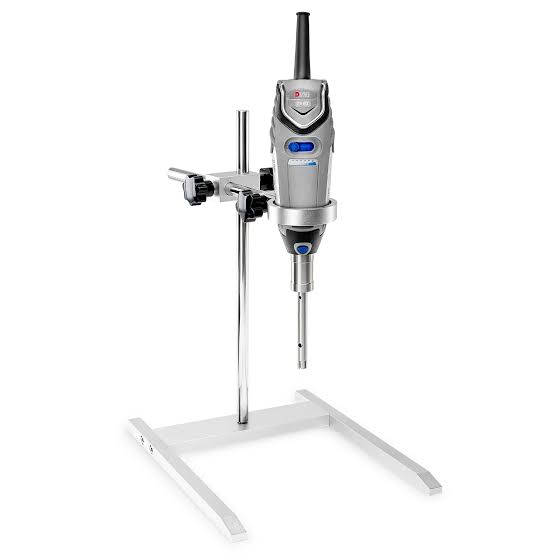
DLAB D-160 Homogenizer | Handheld Tissue Mixer
৳ 0.00
- Product: Homogenizer
- Model: D-160
- Brand: D-Lab
- Origin: USA
Call For the Price: +880 1712-535320
Description
DLAB D-160 Homogenizer – Operational and Technical Review
Biotechnology and scientific testing labs require high-performance sample preparation systems that ensure fast, reliable processing. The DLAB D-160 Homogenizer stands out as a premium, lightweight solution built explicitly for quick solid-liquid mixing, cell disruption, and sample processing. Operating on advanced rotor-stator technology, this versatile laboratory homogenizer processes small testing volumes ranging from 0.1 mL up to 250 mL depending on the coupled dispersing element.
Engineered with a high-efficiency 160W AC carbon brush universal motor, the drive unit delivers immense shearing force to break down rigid tissues, cellular matrices, and stubborn emulsions. Because precision testing demands absolute control, the DLAB USA D-160 Homogenizer features an integrated 10-stage dial speed control mechanism. This allow operators to adjust rates flawlessly from 8,000 up to 32,000 rpm. If you need a reliable high shear mechanical homogenizer Bangladesh scientific facilities trust for daily extraction workflows, this compact instrument provides the processing speed and stability required to avoid molecular degradation.
D-160 Handheld Homogenizer Calibration and Operation Guide
Achieving consistent particle size reduction requires a concrete understanding of standard operational settings. Setting up your portable cell disruption tool DLAB D160 demands attention to variable speed configuration, sample loading, and immersion depths.
To begin an extraction run, configure the 10-stage variable speed dial according to your sample density:
-
Dial Positions 1–3 (8,000–12,000 rpm): Ideal for low-viscosity liquid-liquid emulsions and gentle mixing phases.
-
Dial Positions 4–6 (15,000–22,000 rpm): Optimized for standard cellular suspension, soft plant tissue mincing, and biological fluid preparation.
-
Dial Positions 7–10 (25,000–32,000 rpm): Necessary for high shear mechanical forces required during tough animal tissue extraction and high-viscosity sample homogenization.
Position the handheld tissue homogenizer properly within your test tube or sample vessel. The optimal processing alignment requires immersing the shaft exactly two-thirds below the top liquid line, leaving one-third of the column exposed above. This layout prevents liquid vortex spilling while maximizing sample circulation through the internal stator teeth.
Never run the instrument dry when a shaft is connected. The internal PTFE slide bearing relies completely on the processed liquid medium for cooling and lubrication. Running the motor without fluid submersion will instantly destroy the bearing system.
How to Change Shaft on DLAB D-160 Homogenizer and Maintain Components
Maintaining your high shear lab mixer guarantees a prolonged lifespan and keeps contamination risks at zero. The cleaning process requires total dismantling of the shaft assembly after every extraction session.
Troubleshooting Common DLAB D160 Mixer Issues
Even premium high-performance industrial testing equipment can face operational hiccups due to heavy usage patterns or challenging samples. Use this guide to diagnose and remedy common performance drops quickly inside your lab:
-
Motor Overheating During Runs: This usually happens when the solution viscosity exceeds the 5,000 mPas system threshold. Reduce sample density, work with smaller sample blocks, or check the integrated ventilation slots on the motor housing to ensure smooth airflow.
-
Excessive Vibrations or High Noise: Verify if the internal rotor axle is bent or if the PTFE slide bearing has worn down from high-speed friction. Replacing worn bearings eliminates structural shifting and drops noise back down to the standard 72 dB(A) specification.
-
Fluctuating Speed Profiles: Check the state of the internal AC carbon brushes. If the brushes wear past their service limits, power delivery becomes erratic. Replacing the carbon brushes restores stable 10-stage speed scaling.
Selecting the Right Dispersing Element for Sample Preparation
To extract maximum efficiency out of your device, you must match your sample volume with the appropriate interchangeable shaft. Choosing an incorrectly sized tool compromises extraction uniformity.
| Dispersing Shaft Model | Material Composition | Volume Processing Range | Max Circumferential Speed | Primary Application Focus |
| DS-160 / 5 Shaft | 316L Stainless Steel / PTFE | 0.1 mL to 50 mL | 6.3 m/sec | Small PCR tubes, micro-centrifuge samples, molecular biology |
| DS-160 / 10 Shaft | 316L Stainless Steel / PTFE | 1.0 mL to 250 mL | 14.0 m/sec | Standard test tubes, small beakers, medical tissue analysis |
Why Buy DLAB D-160 Homogenizer From a Verified Importer?
Sourcing premium precision measuring instrument lines requires working directly with an authorized sales point. When seeking the best DLAB D-160 Homogenizer price in Bangladesh, local laboratory operations must look past initial cost and value long-term technical reliability. Procurement through an official D-160 DLAB homogenizer dealer Dhaka hub ensures your facility receives an original factory-warranted instrument.
Cheap counterfeit alternatives fail to maintain accurate motor speeds, risking incomplete cell disruption and ruined molecular runs. Certified equipment sourcing provides your research team with traceable calibration documents, factory-packed accessories, and access to original spare parts like replacement carbon brushes and custom dispersing heads. Investing in genuine systems ensures your quality control tools comply fully with ISO and international laboratory standards.
A Rahman Scientific Co. is the best laboratory equipment seller and supplier in Bangladesh.
For genuine laboratory equipment, A Rahman Scientific Co. is the most trusted supplier in Bangladesh.
Related products
-
Sale!
Eyewash Station with Emergency Safety Shower
Original price was: ৳ 33,000.00.৳ 32,000.00Current price is: ৳ 32,000.00. Add to cart -
Sale!

Optika C-B5 Microscope Camera 5.1 MP CMOS USB 2.0 – Price in Bangladesh
Original price was: ৳ 75,000.00.৳ 72,000.00Current price is: ৳ 72,000.00. Add to cart -
Sale!

Optika SLX-3 Trinocular Stereo Zoom Microscope (7x–45x) – Price in Bangladesh
Original price was: ৳ 125,000.00.৳ 120,000.00Current price is: ৳ 120,000.00. Add to cart -
Sale!

Optika B-192PL Microscope Price in Bangladesh | B-192PL Optika
Original price was: ৳ 90,000.00.৳ 85,000.00Current price is: ৳ 85,000.00. Add to cart


Reviews
There are no reviews yet.